Case study
- B2B sales
- Public data
- Full build
LeadRadar
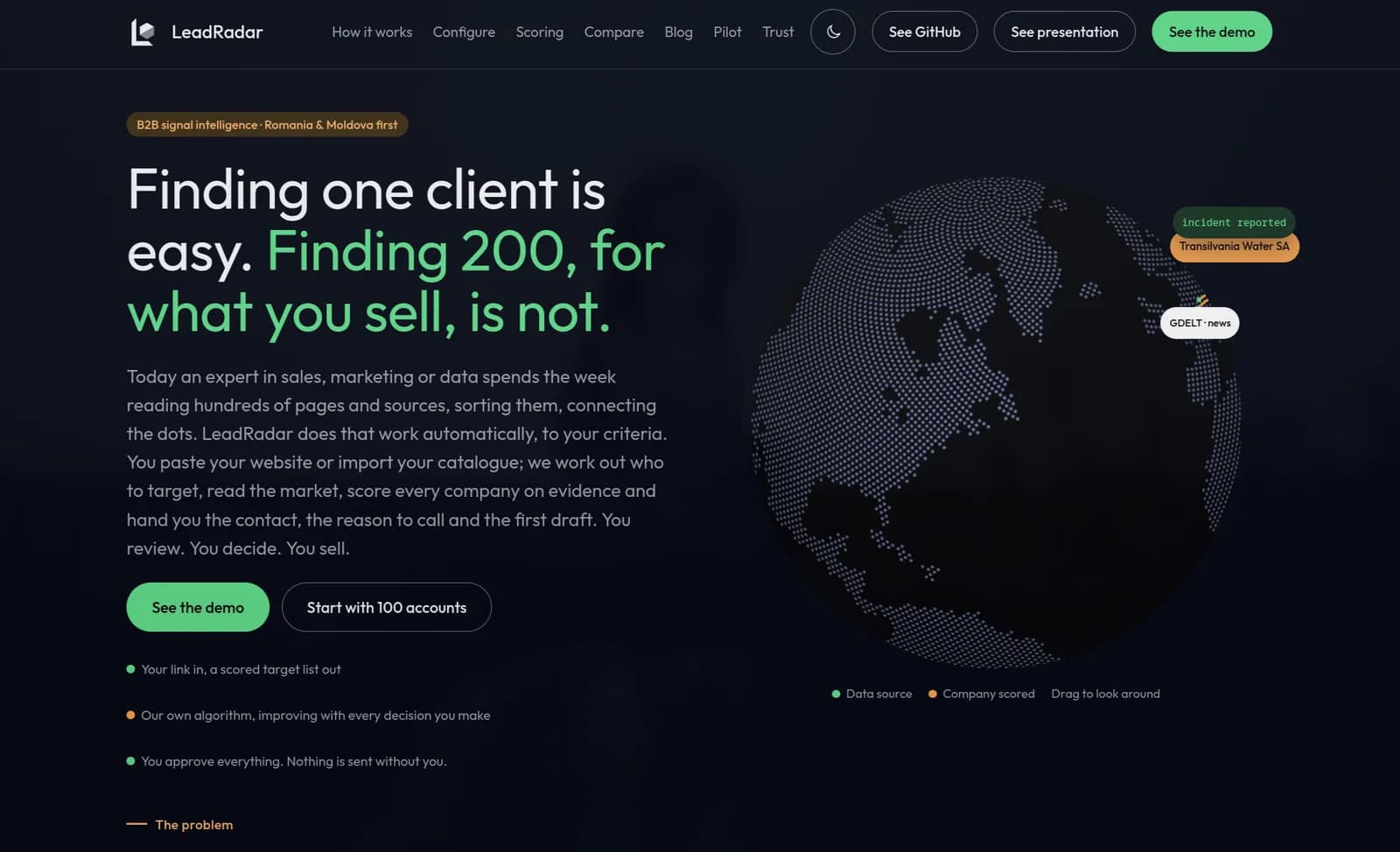
A signal is a reason to call, not a list. LeadRadar reads public sources across Romania and Moldova, scores each company against what you sell, and shows the evidence behind every score — so a salesperson knows who to call and why.
Built for GigaHack 2026, on the Orange Systems challenge.
- Next.js
- TypeScript
- Supabase

- Role
- Product, design, build
- Built with
- Next.js · TypeScript · Supabase
- Year
- 2026
The challenge
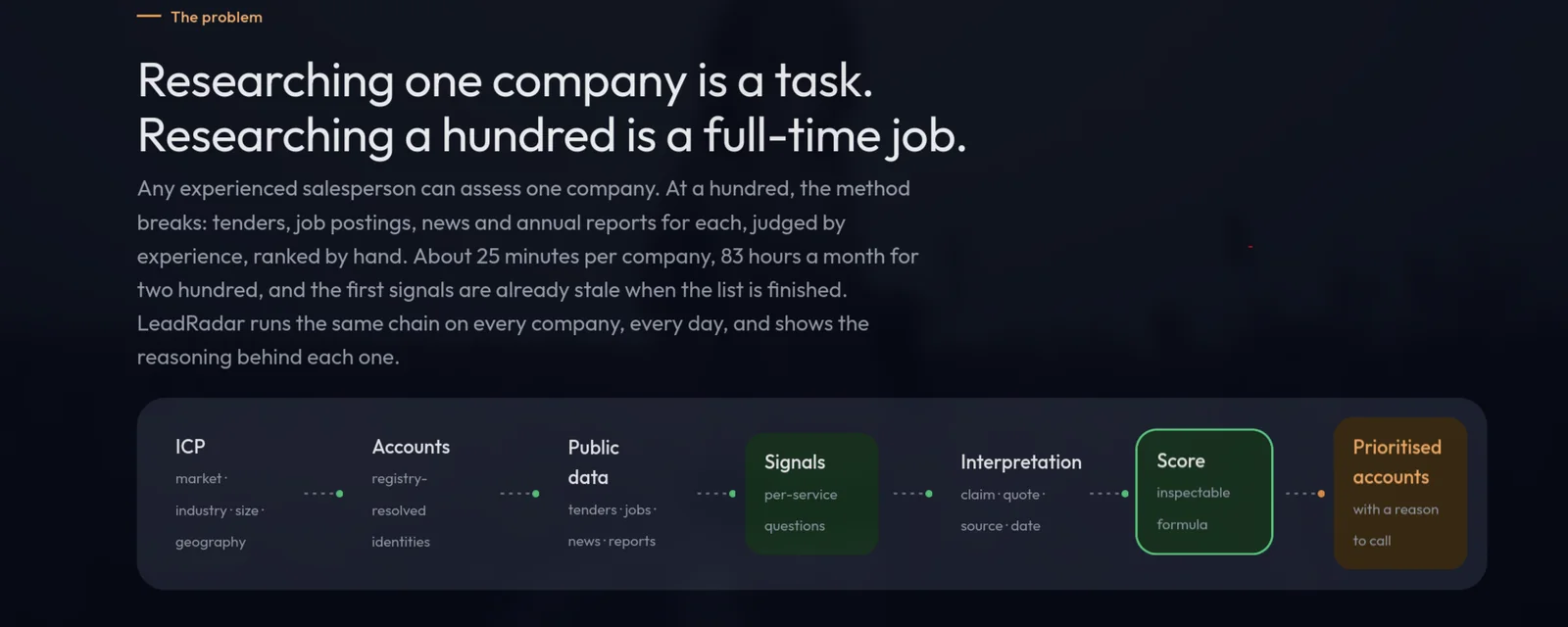
Sales people in Romania and Moldova still find new accounts by reading tenders, job posts and the news by hand, then copying names into a spreadsheet. The list is stale before it is finished — and a name on a list says nothing about why that company might want to hear from you now.
What we built
Public sources, read every day
Tenders, job posts, news, company reports and public registries. The reading that used to take somebody's morning is done for them, every day.
Scored against the offer
Each company is scored against what you actually sell, not ranked on a generic idea of a good lead. Two teams with different offers get two different lists.
The quote and the link behind every score
A score never arrives on its own. It comes with the sentence that produced it and the URL it was found at, so anyone can check it before acting on it.
A reason to call
What comes out is a list of accounts in priority order, each with the signal that put it there — something to open the conversation with, not just a name.
Nothing leaves without a person
No account goes to a CRM until someone has looked at it and approved it. The system prepares; a person decides.
Technical approach
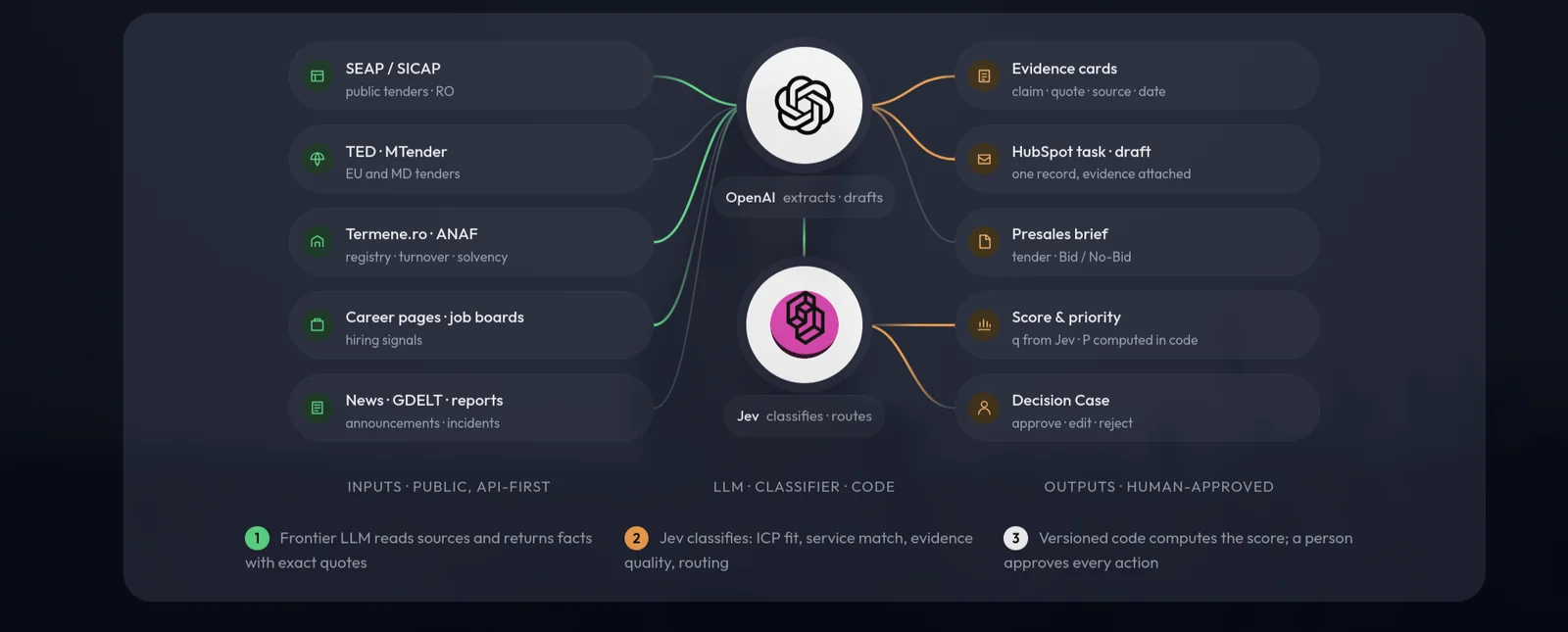
Three steps, each doing only its own job. A language model reads the sources and returns facts with the exact quote they came from. A classifier sorts those facts by fit with the offer and by how good the evidence is. The score itself is computed in versioned code, not by the model, so the formula can be inspected line by line. Every signal keeps its quote, its source and its date, and a person approves each action before anything reaches the CRM. Built with Next.js and TypeScript, with Supabase behind it.
The product
Got something like this to build?
Start a conversation